You do not need to read Japanese to start identifying a Japanese Pokémon card. Look for the small collector number near the bottom of the card, copy the complete number and any letters, then compare the artwork and printed details with a matching catalog entry.
A name such as Pikachu can lead to many different cards. A number such as 023/ADV-P narrows the search considerably. This guide walks through the two common patterns you will encounter: numbers within a set and numbers within a promotional series.
1. Find the collector number
Start along the bottom edge of the card. The position and surrounding markings vary by era, so check both corners. Copy the entire identifier, including leading zeros, the slash and any letter suffix. For example, keep 074/DP-P together.
Some cards also show a Pokédex number near the Pokémon’s height, weight or other species information. That number identifies the Pokémon species rather than the particular card. Piplup is a useful example: its species number is 393, while the promo used below is 074/DP-P.
If a number does not produce a clear match, add the Pokémon’s name. You can use its English name in KnowMyCards’ card search, then compare the Japanese card image with the card in your hand.
2. Tell a set number from a promo code
A number within a set: 105/100
A number-and-number pattern usually identifies a card within a particular set. The left-hand number identifies the card; the number after the slash is the printed checklist count. Additional cards can be numbered beyond it, so it is not always the total number of cards in the release. Lillie’s Ribombee 105/100 in Japanese Battle Partners is one example. Its official Japanese card entry shows both SV9 and 105/100.
The fraction alone is not a unique identifier across every Pokémon set. Match the set code or symbol, Pokémon, artwork and language as well. On modern Japanese cards, a separate alphanumeric set code helps identify the product. It is different from the single-letter regulation mark used for play eligibility.
A number within a promo series: 074/DP-P
A code such as 074/DP-P identifies a numbered card in a promotional series. Read the whole code: 074 is the card’s number in that series, and DP-P identifies the series. The suffix is not a condition or grading score.
Three examples in the KnowMyCards catalog are ADV-P Promotional cards, DP-P Promotional cards and XY-P: XY Promos. Other formats exist: Espeon Star 025/PLAY uses a different promo-series suffix. Do not assume every Japanese promo follows the same pattern.
3. Match three real Japanese promo cards
Open the linked card image and compare it with your copy. Start with the collector number, then check the illustration, printed name and other visible details. The examples below demonstrate identification; they are not a ranking of rarity or value.
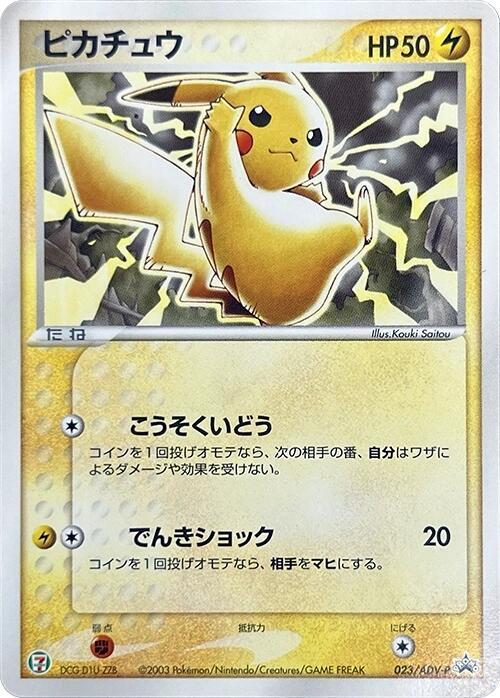
Pikachu 023/ADV-P
The full identifier is 023/ADV-P. Keep the leading zero and suffix when comparing it with a listing.
For neighboring entries, browse the ADV-P promo series. If the artwork differs, continue checking even when the Pokémon’s name matches.
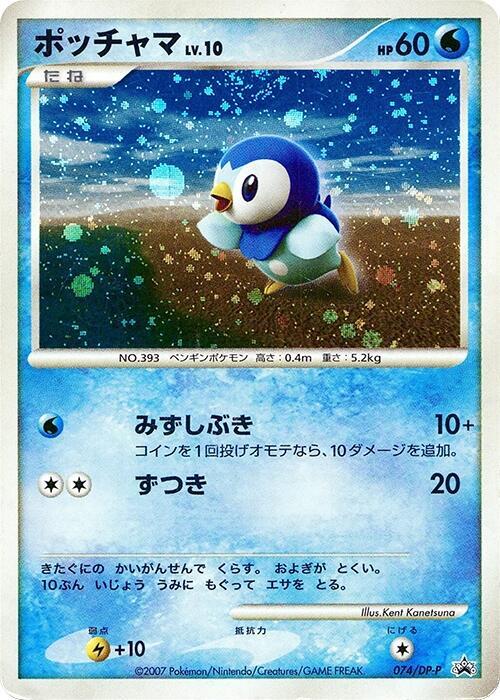
Piplup 074/DP-P
Use 074/DP-P to identify this promo. The separate species number 393 will not distinguish it from other Piplup cards.
Its series is DP-P Promotional cards. Compare the catalog image, then confirm with the official Japanese card entry when needed.
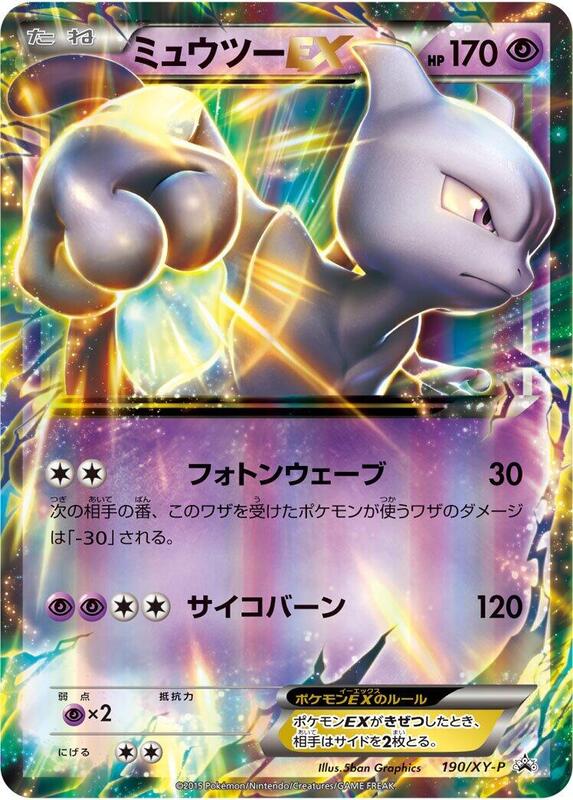
Mewtwo EX 190/XY-P
Match the full 190/XY-P identifier and the artwork. Include the EX designation when comparing names; a search for Mewtwo alone covers many different cards.
You can also browse XY-P: XY Promos or check the official Mewtwo EX entry.
4. Confirm the exact card before comparing values
Use this short checklist after finding a likely match:
- Language: confirm that the entry is Japanese. Similar artwork on an English card does not establish the same printing or price.
- Complete number: compare every digit and letter, including the promo suffix or set code.
- Artwork and printed details: check the illustration, HP, name designations such as EX, and any stamps.
- Printing: compare the foil treatment and available printing options. A flat catalog image may not show the finish clearly.
Some older and promotional cards do not have a collector number in either of these formats. If yours has no number, or the number is worn, start with a name page such as Pikachu cards, Eevee cards or Mewtwo cards. Those pages include multiple releases and may include both languages, so confirm the language on the individual card page.
A visual match helps identify a catalog entry. It does not authenticate a physical card. If the image and descriptive metadata disagree, check the official Japanese Pokémon card database before relying on the listing.
5. Check the price for your copy
Once you have the right card, choose the matching printing and condition on its KnowMyCards page. An ungraded Near Mint estimate is not automatically the value of a worn copy or a graded card.
Check the price’s update date and the dates of reported sales. When comparing a sale, read its title to confirm the card, language, printing and grade. A sale for a different version is not a direct comparison just because the Pokémon’s name matches.
KnowMyCards shows supplier market estimates and available history. Graded estimates can include other printings, and recent reported sales can have incomplete or mismatched details. Missing data does not mean a card has no value. Read how our prices and history work for sources and limitations.
Ready to look up your card? Search by its full number and name, or browse the set directory when you already know the series.